


Where is God? That’s a question we often ask when things get dark or when we see horror, injustice, and evil. Some shy from this question, but it is an excellent one. The Hebrew scriptures are full of this question. Where is God? Will God save us? The prophets attempted to answer the question by saying that God was with the outcast, the oppressed, the poor, those crushed by the powers of the world.
The answer can seem complex or even end up being an appeal to mystery. But, what if the answer is simple? What if the answer is God is with the hurting and the marginalized? But what about making the world better? What about bringing about New Creation? Paul tells us the truth. The Church is the Body of Christ. That means that the Church is an incarnate body reflecting God in the world. The Church should be doing the work of New Creation. But we fail miserably because we so badly want power. We want to control culture, force people to live like us, or simply get rid of people not like us.
This reality is part of what Rev. Martin Luther King, Jr. was speaking about in his Letter from a Birmingham Jail. He was writing to white clergy in churches that should be speaking out, but were afraid to rock the boat. They were afraid to be seen as allies with the out group of that time. The intended audience was not the racist clergy arguing that African-Americans were sub-human or had no souls. No, the audience was those who knew racism and unjust laws were wrong but stayed silent. This was a reminder that the Church was to be part of those bringing the solution and prophetically calling the government to live up to the promise of liberty and freedom.
I don’t think I’m special, but I do have lived experience that informs my thinking and my recognition of evil. The Church can hear and see if we wish to. If we dare to embrace empathy. After all, the one we claim to be disciples of is the ultimate example of empathy. The word we see use for this is kenosis self-emptying. My friend Dr. Tom Oord used the phrase essential kenosis many years ago to describe God’s nature. That phrase has been refined into the concept of God as Amipotent. A God of power in uncontrolling love. In God’s amipotence, we are invited to participate in creating. We are invited to participate in the act of New Creation. Making the world a better place.
I learned both empathy and that I had a vastly different experience than human beings of color when my family moved to a rural neighborhood which was then outside Clarksville, TN. (the neighborhood is in Clarksville now). The first I heard of something different was my parents talking about the realtor trying to steer them away from the old farmhouse and land they liked. He mentioned property values in hushed tones. The reason, you see, is that except for walking horse farms a couple miles down our gravel road, we would be the only white family in the neighborhood.
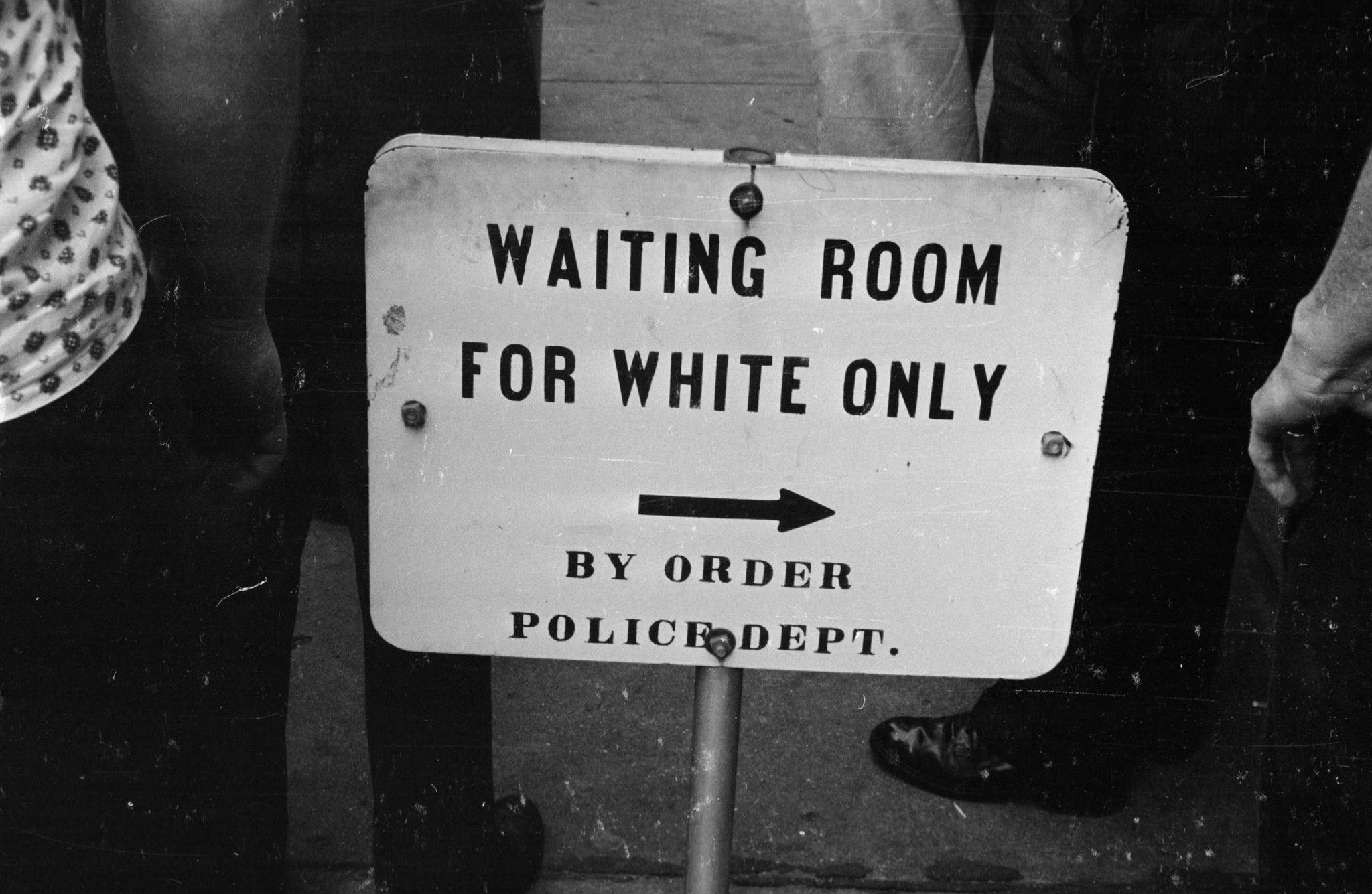
I received an education in dissonance. This was the late 1970s and southern schools taught a skewed history. The experiences I learned about in the neighborhood were very different. I learned of segregation. I learned of inequality in education and how the color of skin determined where you were and were not allowed to go. I heard stories of lynchings from elderly men. But I also heard stories of liberation and hope. Then there was the music. Gospel sung with a guitar on an old dusty porch. Jazz, early hip hop, and stories of struggle and hope. The schools finally caught up, but not with the gritty reality of the lived experiences of those who experienced hatred as government policy.
In that context, I was not surprised by the racist meme the president of the United States shared*. I was also not surprised by the defense given by Christian influencers like Allie Beth Stuckey, Alisa Childers, Frank Turek, and others. I am surprised by the continued silence from Christian leaders. Some are speaking, but even a clearly evil and racist things doesn’t qualm the fears of the loss of something - what that something is other than money and power I don’t know. We are so quick to name things as evil, but when faced with evil within, we shy away. There is an uncomfortable something swimming under the surface. Some large church pastors and leaders are beginning to tell us to speak of the positive and beautiful. Things they accused many of us of being “progressive” or “liberal” for desiring. They want us to just get along now that their world is being shaken by reality. But it’s hard to stomach that concern. They promoted those whose voices are divisive and even hateful.
The stories of others is more personal than mine. My experience is of the stories handed to me, but I know those who experienced this in that same time period. Felicia Murrel speaks of this reality in her book &: The Rstorative Power of Love in an Either/Or World. This is about the 1970s and early 80’s - the same time frame in which I was hearing stories of oppression, others were still living it.
In the small rural North Carolina town of my youth, Blacks lived on one side of the tracks and whites on the other. The grocery stores, diners, convenience store, post office, schools, and gas stations were across the tracks, on the white side of town. On our side of the tracks, only a small store my great-uncle owned, the candy lady’s home, and three predominantly Black churches were easily accessible to us. Even in the late seventies and on into the early eighties, we stepped off the sidewalk when white people walked past, turning our gaze downward or to the side, never making direct eye contact. We paused our movement to let them enter establishments first, and on the rare occasion that we got to eat at Jones’s (the local café), we called in our food order and then crossed the railroad tracks to the café’s back door, where we gave our money to the one Black worker and retrieved our greasy hamburgers and hot dogs in a small paper sack. Nothing about this life seemed abnormal. This was our story. (Murrel)
It is Black History Month in the United States. The ongoing reality of racism in personal and systemic forms is a reason why we need such a month. My own experience reminds me that history excludes the voices of many people. The reality of the harm done by the Church being explicit or implicit in racist attitudes still haunts us. The power of political figures to shape the language and attitudes of Christians is stunning. Especially when so many warned of such a thing happening. It was just supposed to be liberals who sent armed agents into the streets to enforce behavior and compliance.
We can learn from people who have had different experiences, especially when those experiences expose our own complicity in harmful systems. Dr. James Cone saw hope in the cross.
African Americans embraced the story of Jesus, the crucified Christ, whose death they claimed paradoxically gave them life, just as God resurrected him in the life of the earliest Christian community. While the lynching tree symbolized white power and “black death,” the cross symbolized divine power and “black life”—God overcoming the power of sin and death.
The power of sin and death is Old Creation power. God has overcome that through the kenotic act of self sacrifice on the cross of human violence. That’s New Creation power.
Where is God? God is there in every moment. But if we want to see our world transformed, we are part of God’s solution. Carrying hope, mercy, and love into a dark and violent world. Speaking prophetic truth into the harm done by the powerful - especially if we gave them that power. We can see God in the faces of the outcast, the immigrant, the person who does not look, worship, or vote like us. Light shines on the darkness and the darkness cannot hide. If we refuse to be the light, the darkness threatens to overcome. There will always be those who steadfastly refuse to give into the dark. Maybe that can be us in this moment.
*I know of the explanations, but which do we believe. The administration made so many claims yesterday, it could make your head spin. But the constant claim from the president is that only he and his top advisor hold the keys to his social media accounts.
Cone, James H.. The Cross and the Lynching Tree (p. 41). Kindle Edition.
Murrell, Felicia. And: The Restorative Power of Love in an Either/Or World (pp. 22-23). Kindle Edition.