


Have you been watching Pluribus? If you have not, it is a fascinating story. If you have and have not watched the entire season, there may be minor spoilers. My thought on the series from early on is “what if the zombies were nice and wanted everyone to be happy?” I still feel that way, but I’ll explain a bit if you have not seen the show.
The quick summary is that a radio signal is received from space and scientists work to decode it. Eventually we learn that the signal contains a chemical composition which transforms humans into happy people who are all connected. Because the chemicals are eventually spread quickly, many humans die. Our main protagonist, Carol, is not affected by the chemical but her wife is. Like many others, her wife dies from the transformation. Carol is a writer of fantasy fiction, an alcoholic, and a cynic. She quickly realizes that the happiness she encounters is false and wrong. Carol even tries to gather the 12 “survivors” but finds out most are ok with the world as it is. Some want to remain with their families, one exploits the niceness and eagerness to please of “the others.” But Carol is steadfast.
As the series has progressed, many theories have emerged about the meaning of the story. They are all good theories such as a commentary on A.I. But for me, this is a picture of modern white evangelicalism’s desire for uniformity. Because, I am like Carol in my critique of uniformity. You see, the uniformity has been conflated for unity within white evangelicalism. This is also true for various fandoms like Star Wars and Star Trek. But we can limit our discussion to evangelicalism. The most extreme examples of demands for uniformity come from the apologetics influencers like Alisa Childers, Frank Turek, and Sean McDowell. These three tend to conflate specific expressions of doctrines or dogmas and orthodoxy. This was evident when Kirk Cameron dared to have a reasoned conversation on the idea of annihilation versus eternal conscious torment. Cameron eventually had to respond and renew his commitment to orthodoxy.
But this conflation goes deeper in evangelical contexts. The language used is of happiness, joy, and peace if we are unified. But the word that is being described is actually uniformity. This is the same concept behind much of our struggle to accept immigrants in the U.S. Many evangelicals are terrified that their uniformity will be destroyed. But can someone else really destroy a deeply held ideology? It sure doesn’t appear to. This is where parallels start to emerge with the show Pluribus. Carol comes to think of the vast majority of humanity as “the others” simply because she does not believe them to be anything like her. The others are very happy, at least they appear to be.
But if Carol expresses extreme anger or frustration, the others (all of them) go into a seizure state which can cause death by accident. The others cannot lie, bu tthey also want to please Carol so they get into dilemmas regarding how to respond. The others have strict ideology about killing any living thing, but their sustenance comes from a surprising source. The others appear to be incredibly happy, but is their existence real? It is definitely not an experience driven existence because they experience all things almost at once and as one. There is an almost mycelial nature to the way the others know things. They seem only slightly higher than the fungus zombies of The Last of Us. They want to convert those who are immune to the chemical responsible for their state, but they can’t force it. At least they claim they cannot force it.
Carol sees the others as living empty lives and believes their ideology makes their lives eventually unsustainable. Her mission is to determine how to make things “right” - how to restore humanity to being individuals. As a writer, Carol senses that uniformity is not only boring, it is deadly. The others are very much like the uniformity desiring evangelicals in the United States. They want everyone to think like them - exactly like them. From political views, doctrines, and cultural assumptions, to something as simple as wishing someone “happy holidays;” any deviation leads to outrage or anger. There is an attitude of superiority masking a deep fear of those who are different. If you are “in” then you can understand all the cultural ideology required to fit in. But if you are out, show any degree of doubt about the ideology, then you are excluded and thought to be evil.
This is not an expression of Christianity as described in the New Testament, but it is a dominant force of Christian thought. But it is such a lacking idea that if you are able to step outside of the bubble, you eventually discover that the world is far richer, wider, and exciting than uniformity allows. Like Carol wanting the world to return to “normal,” many of us want a world in which diversity is a strength, where love and mercy are more important than getting the small details exactly right. A place where people don’t need to deconstruct their faith because they are allowed to form a deep and enduring faith even if it looks different. Maybe it would be easier to just allow assimilation to take root, but then what is there to discover and how do we grow?
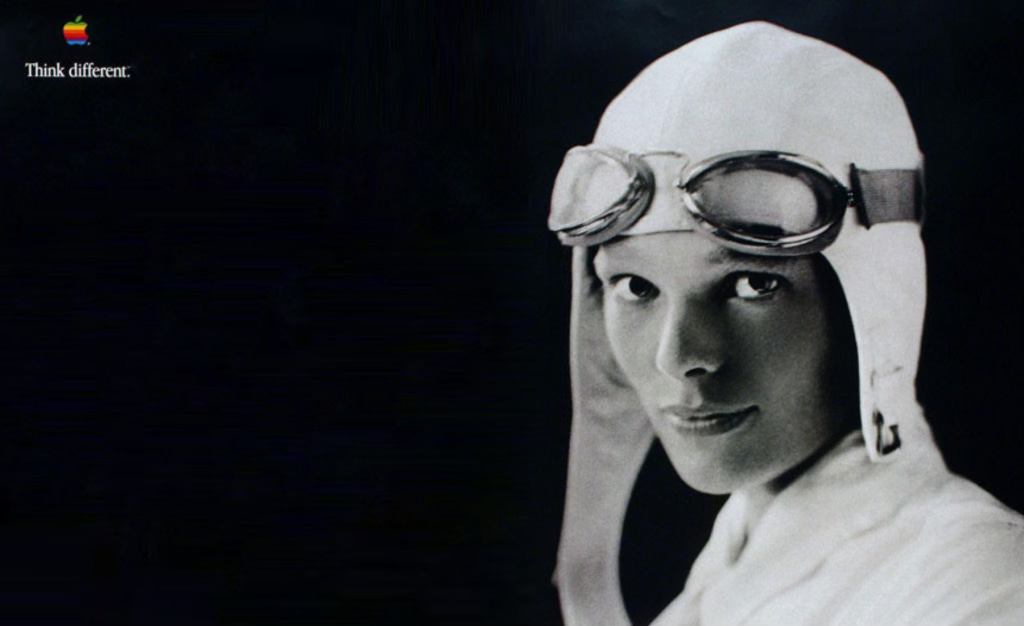
I really hope something better than the cynicism Carol gives in to in the season finale of Pluribus is in store for the Church. But, we are going to need to let go of the desire for uniformity for the Church to flourish. It is much harder to lose something that is real and allows for questions, than something that is so fragile it requires extensive instructions to follow. I keep thinking back to an ad campaign launched by Apple shortly after Steve Jobs returned in the 1990’s and began the turn around of the company.
Here’s to the crazy ones.
The misfits.
The rebels.
The troublemakers.
The round pegs in the square holes.The ones who see things differently.
They’re not fond of rules.
And they have no respect for the status quo.You can quote them, disagree with them,
glorify or vilify them.
About the only thing you can’t do is ignore them.Because they change things.
They push the human race forward.
While some may see them as the crazy ones,
we see genius.Because the people who are crazy enough to think
they can change the world, are the ones who do.
Maybe it is time for us to Think Different.