


Ron Carter is one of the greatest and most prolific jazz bassists of all time. He has played with other jazz greats throughout his life. He joined the Miles Davis quintet when he was 25. The quintet included Herbie Hancock, Wayne Shorter, and Tony Williams whom he would also play with in later groups and projects. Carter played with greats like Thelonius Monk, Cannonball Adderley, Freddie Hubbard, Aretha Franklin, Lena Horne, and A Tribe Called Quest. Ron Carter is a great bassist and he believes that his greatness is a gift he gives to help those around him be better.
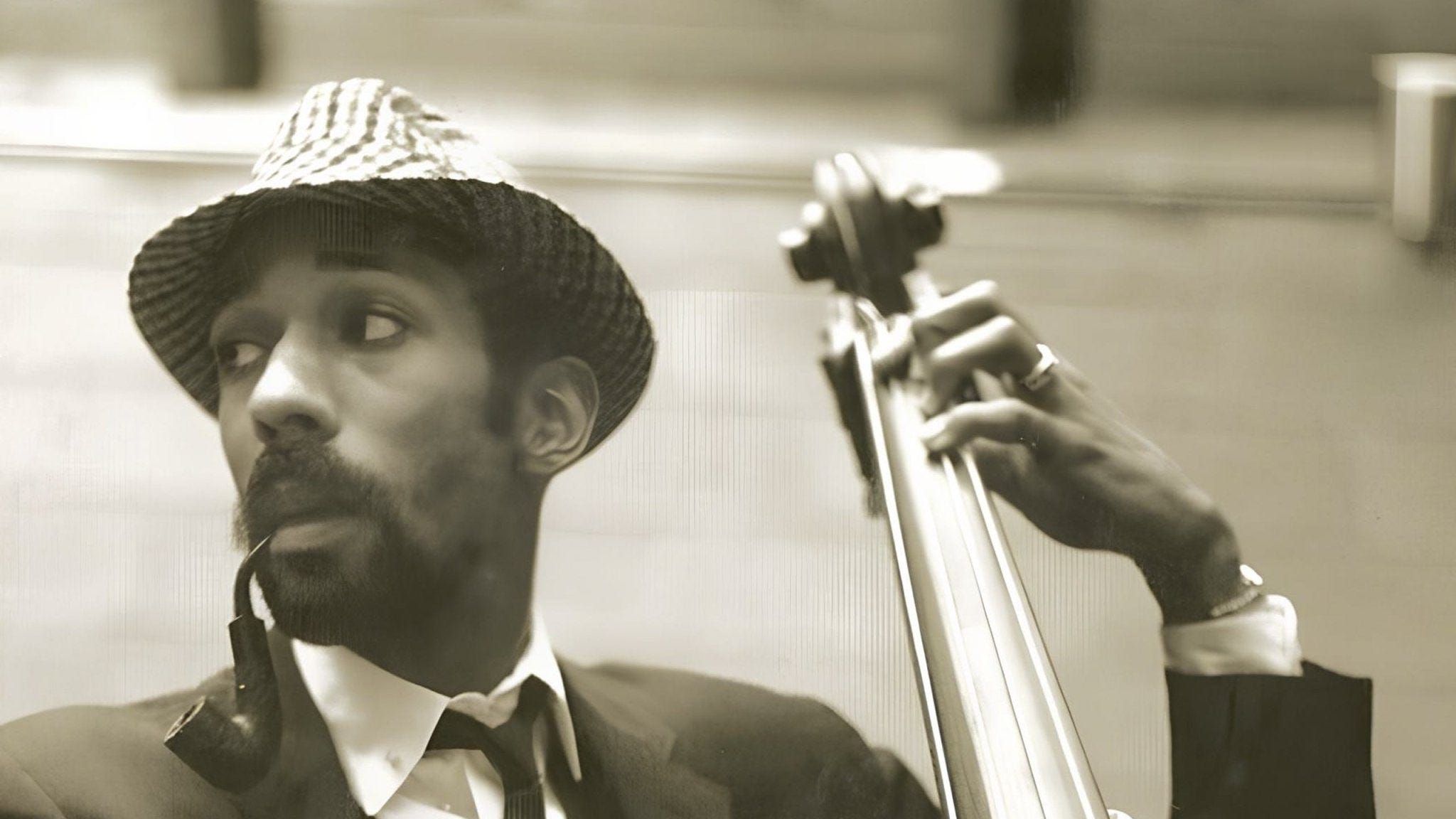
Jazz music is not a music of precision in the traditional sense of precision. There are moments when a precise note may be called for, but jazz is an art that is always reaching and exploring the edges. It is an art in which the individuals play in relation to the music, one another, and the core anchor of the style. Jazz requires trust and a willingness to follow the notes where they may lead. Even you play a wrong note, your fellow musicians find a way to incorporate it and make the note “right.”
I hear echoes of jazz when I read Tolkien’s Silmarillion and the chapter “Music of the Ainur”. This is Tolkien’s creation story of the world of Middle Earth. It is creation in which music is the medium for creating. When Melkor introduces his own music in dissonance, Iluvatar incorporates that dissonance and reshapes the whole for the good. Much like a jazz combo brings the dissonant note into the piece and makes it “right,” Iluvatar takes what Melkor means for his purposes and turns it into beauty as Iluvatar desires.
Like jazz, I truly believe that much of what Tolkien is telling us in his work is relational. Not a scholarly take, but a take born in love and reverence for the material. I just can’t help seeing the multiple layers of relationship within the stories of Middle Earth. Relationship with the earth, relationship of races, and relationships of friends. Even the relationship between good and evil. Many of the stories tell of how characters are made better through those relationships.
Doing theology in public works best when it is done relationally and with a method like jazz. Probing at the edges and seeking the wonder present in an idea or a discovery. Doing theology this way takes trust, a centering, and often courage. It is not a precise undertaking even when we sometimes need to use precise language. Theology is done in faithfulness, not precision. Scripture shows us an often wild and surprising Spirit of God. When we try to fit theology into precise parameters, we end up leaving it bruised and bloody.
My friend Tim puts it this way:
The kind of work theology does is big enough to pluck up a nation, to reduce it to rubble, and to plant something new. Theology cannot be beholden to preconceptions, no matter how comforting or natural those preconceptions may be to us. If it fits nicely into a given category, it is probably not theology. Theology is social, but it is not social talk. Theology is scientific, but it is not science talk. Theology is political, but it is not political talk. Theology is God-talk. Because it is God-talk, it will not and cannot be beholden to anything less than God. So, the theologian speaks with words that are gifted by God. Of course, this only happens long after the theologian comes to terms with being known by God. (Gaines)
Of course, when we do theology we are usually centered in a tradition like Wesleyan-Holiness, Anabaptist, Orthodox, Roman Catholic, etc. But within that centering, we have a lot of movement to the edges. Dan Boone uses the tetherball to explain this movement. Always anchored, but able to move in multiple planes and directions. Contrast this idea with guardrails as an example. Guardrails keep you in the lines whereas centering keeps you grounded.
Many theologians practice this style of doing theology. You may encounter them telling stories, working out a concept, or simply thinking out how to exist in a world that seems so upside down at times. But you will also see them wrestling with sacred text, doctrines, people, and God. As Tim says, “[a]n invitation to walk the theological life will also be an invitation to wrestle with life’s largest questions, with social and cultural issues, and most of all with the holy God who meets us in the wrestling.”
And much like jazz, doing theology in this style takes trust and relationship. Trust that we are wrestling with God in honesty and vulnerability; trust that we are authentically working to understand God and our world. The sad part is that just as some do not “get” jazz music, some do not get doing theology as wrestlers, prodders, and explorers. No, these neither trust nor are willing to work in relational trust.

I have seen many theologians who dare to work out theology in public get attacked. Some are my friends. The funny thing is that even when those friends and I disagree, we stay friends. Because we trust in relationship. We know that even in disagreement, we trust that we are each working out how to know God.
Mistrust is the currency of those who do not trust. They will sow mistrust and accusation outside of any relational trust. It appears as a cowardly and proud stance rather than one of humble seeking. Often the people wanting to lay down guardrails and expel have their own metaphorical planks in their eyes.
To be explicit, when theologian Craig Keen was recently accused by fellow clergy of teaching against doctrine, his accusers had not had any interactions with him. Trust me, he will dialogue with you if you disagree and he will explain things when you do not understand. Any mistrust the accusers attempted to sow appears to have had the opposite effect. Maybe even a “Streisand Effect” because now more people are aware of the work of a retired professor of religion who shares his thoughts on the internet.
You might find it ironic, but two of the five churches represented by the accusers have statements on the doctrine of scripture on public websites which are contrary to that of the Church of the Nazarene. Fundamentalists typically do not care that they break with doctrines because they are arrogant enough to believe that their contrary take is just fine because it matches their view of God. It’s like they read or hear the parable of the wheat and the weeds and think it’s a good idea to disobey Jesus and try to rip the weeds out even though they may destroy the wheat.
Be a wrestling jazz musician rather than a referee. Trust the Spirit to draw others to that beauty. Or decide to be a referee policing boundaries and miss those beautiful stories.
GAINES, TIMOTHY. WALKING THE THEOLOGICAL LIFE Discovering Method for Theology in the Lives of Biblical Characters. INTERVARSITY PRESS, 2024.