


There are many passages of scripture which are abused and used in abusive ways. One of the most abused passages of scripture is Romans chapter 13. The shorthand for that chapter is usually just verse one. “Let every person be subject to the governing authorities, for there is no authority except from God, and those authorities that exist have been instituted by God.” (Rom 13:1 NRSVue) The hypocritical way this is used is strikingly evident in the ways that many evangelicals use it in 2026 to quiet resistance and outcries for governmental restraint of violence.
Those same voices refused to follow government requests during the height of the COVID pandemic. But now, any mention of the rejection of violence, calls for compassion, or even calling for our government to follow its own laws is met with “Romans 13:1 is good enough for me.” This is a way to say “shut up, you are getting out of line.” It is a passage used by oppressors and those who don’t want the status quo challenged. The slaveholders in the antebellum South used it to reinforce the dehumanizing owning of human beings. This continued in the post civil wars years and was an ideology during the Jim Crow era.
Our non-white brothers and sisters have experienced this snuffing out of demands for justice. Many remain silent until it directly affects them or those who look like them. It is easy for those of us who have been the majority to ignore the reality around us because it is not aimed at us. Until it is. The protesting of oppression and violence was once a concern for holiness folk. But now many holiness folk see themselves on the right side of the tracks and don’t want the attention that prophetic truth brings upon those who proclaim it. So they stay silent, or worse participate in the rhetoric of empire.
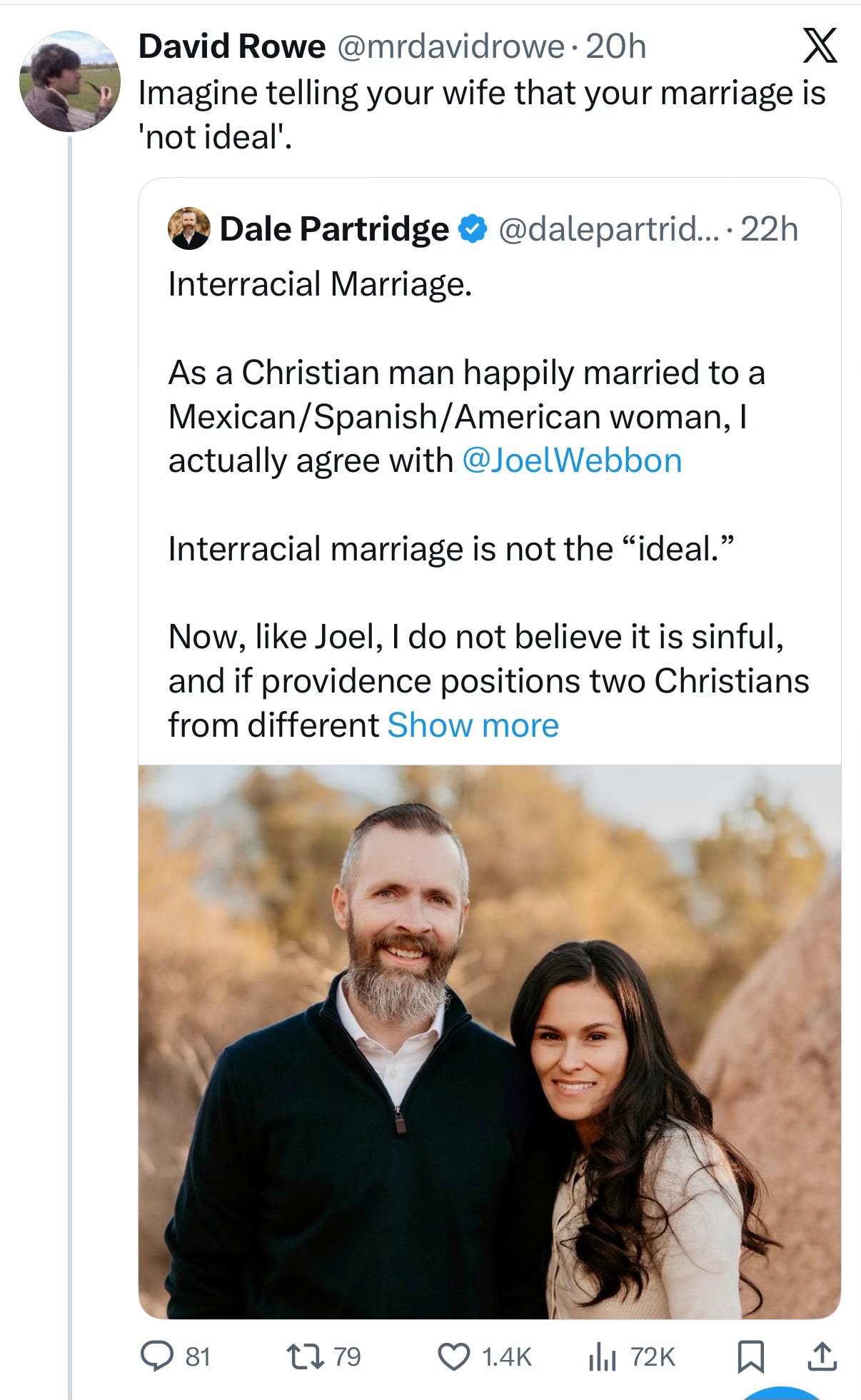
Dr. Esau McCaulley is a conservative theologian who is African-American. He deals with Romans 13 in his excellent book Reading While Black: African American Biblical Interpretation as an Exercise in Hope. This is an excellent book for helping us understand the complex and diverse nature of the Black Church. Because that hermeneutical tradition is not a mirror of white evangelical OR progressive theology. It is a lens of liberating truth and God’s siding with the oppressed and enslaved. I highly recommend the book to anyone who would like a wider understanding of American Christianity not enthralled with patriarchal nationalism. Or if you simply find the trend of famous white male pastors like Dale Partridge, Joel Webbon, or Doug Wilson going full on racist a bit troubling*.
I find McCaulley’s discussion of finding a Christian theology of policing compelling as he exegetes Romans from the point of view of the one for whom empire has stood for power over others. Just to be clear, this is the position of Paul’s early audience. They were not in a place of privilege like white evangelicals in the United States. McCaulley gets to the point of what Paul is talking about.
First, in Romans 13:3-4, it is the state’s attitude, not the soldier/officer as a vocation that stands at the center of Paul’s concerns. Stated differently, Paul recognizes that the state has a tremendous influence on how the soldier/officer treats its citizens. Thus, if there is to be a reform it must be structural and not merely individualistic. This is grounds in a democracy for a structural advocacy on behalf of the powerless. Second, Paul says that the government should not be a source of fear for the innocent. This problem of innocent fearfulness continues to plague encounters between Black persons and law enforcement. (McCaulley p35)
Paul is not saying that empire is always good, but that is what responsible power would look like. Innocence is not a help to many stomped upon by empire. We are seeing images of the innocent in fear because of the methods employed by the powers. Fear is the enemy of freedom and it is the enemy of love. There have always been those whose live are on the edge of fear from the authorities of the state. McCaulley explains this.
For the American Christian this means that he or she has to face the fact that our government has crafted laws over the course of centuries, not decades, that were designed to disenfranchise Black people. These laws were then enforced by means of the state’s power of the sword. Historically in America, the issue has been institutional corporate sin undergirded by the policing power of the state. (ibid p39)
The system carries the guilt of that, but when we recognize that the system is twisted, we can more easily speak out for change. But calls for change get hit with Romans 1. That’s not really the weapon many think. Reading scripture in the fullness of Jesus helps us see that God sides with those harmed by systems. The very nature of sin is systemic. Even in the individual. The jazz great Nina Simone speaks of the truth that freedom is “no fear.”
So when the powers wield fear we should pay attention to what that means. If freedom is no fear, then the things that bring fear are not things that bring freedom. I believe that McCaulley’s claims on a Christian theology of policing to be important. McCaulley places the focus upon a theology of persons.
A Christian theology of policing, then, must grow out of a Christian theology of persons. This Christian theology of policing must remember that the state is only a steward or caretaker of persons. It did not create them and it does not own or define them. God is our creator, and he will have a word for those who attempt to mar the image of God in any person. We are being the Christians God called us to be when we remind the state of the limits of its power. (ibid p40)
The state did not create human beings. The state does not own human beings. The state cannot define who is and is not a human being. That is the purview of Creator (at least for Christians). I think the best response to Romans 13:1 to be Genesis 1:27
So God created humans in his image,
in the image of God he created them;
male and female he created them. (NRSVue)
I am going to get a little specific so I apologize to those outside the Church of the Nazarene (COTN). But I think this is important. Silence in the face of violence and state instigated chaos is not being discerning. My denomination has made statements about other governments using violence and fear as a tactic to enforce obedience to ideology, yet the current silence on the same in the United States is deafening. I am sure there is a reason. Even if the global church does not feel it appropriate, we do have a regional office. It would be fairly simple. The Northern California District of the COTN is living out the example by simply sharing words from our Manual. Words that fall within a section that became essential doctrine a few years ago.
The NorCal District Church of the Nazarene laments and renounces the unjust use of violence against all peoples, including our immigrant siblings. In doing so we echo Nazarene Manual Paragraph 29.10:
“We call our people to wisdom in their use of time, money and bodies activities subversive of the Christian ethic that promote…violence [and] treating others as objects rather than persons created in the image of God are to be avoided.”
The district is sharing this daily on Facebook. They have gotten thank you, but also some making comments against the doctrines of the COTN. One commenter posted a comment saying that “they need to get rid of the immigrants and if that causes violence, so be it.” That doesn’t sound very holy.
The silence is especially disappointing considering the actions of the USA/Canada region after Charlie Kirk was assassinated. Then we were told that a sermon claiming Kirk was a brilliant theologian who could share the gospel better than most pastors was a powerful message. An even more powerful message would be to share the calls and claims of our Covenant of Christian Conduct which invites us to work to make the world a more equitable and just society through the resistance of worldly systems that harm or dehumanize. We have the truth and a promise of mercy; why aren’t we sharing that truth?
I am disappointed, but not surprised. I make the assumption that silence is believed to be the safest option. But what if we could imagine our Wesleyan-Holiness distinctive being light in a time of darkness? That we have a hopeful message of transforming light in the chaos of this world? What if we have a doctrine of entire sanctification in which these powers of this world have no hold? That’s our hope and our true path to reaching the lost and the wandering. Not embracing the powers or the silence, but speaking Holy Prophetic Love into our world and culture.
Here’s a larger context from the Manual, Church of the Nazarene, 2023 for the underpinnings of the NorCal Dostrict’s statement:
28.4. We call our people to proclaim and demonstrate God’s grace and love to the world. Equipping believers for reconciling love as ambassadors for Christ in the world is the shared responsibility of every congregation. God calls us to attitudes, practices of hospitality, and relationships that value all persons. We participate as joyful disciples, engaging with others to create a society that mirrors God’s purposes. Our faith is to work through love. Therefore, the Church is to give herself to the care, feeding, clothing, and shelter of the poor and marginalized. A life of Christian holiness will entail efforts to create a more just and equitable society and world, especially for the poor, the oppressed, and those who cannot speak for themselves. (Leviticus 19:18, 34; Deuteronomy 15:7-8, 11; Isaiah 61:1; Zechariah 9:12; Matthew 25:34-44; Romans 5:7-8, 12:1; 2 Corinthians 5:16, 20; Galatians 5:6; Ephesians 2:10,6:12; Philippians 2:5-11; Colossians 1:27; James 2:1-9)
28.10. We call our people to be peacemakers. Because Jesus blessed peacemakers and commanded us to love our enemies, we commit ourselves to being agents of reconciliation in our families, among friends, at the workplace, in our churches, societies, nations, people groups, and tribes. (Psalm 34:14; Matthew 5:9, 43-48; 2 Corinthians 5:18-20; Ephesians 2:14-16; Hebrews 12:14)
29.6. We call our people to reject attitudes and actions that undermine the good of people and devalue individuals. ALL HUMANS are created in the image of God and Christ died for ALL, therefore EVERY person we encounter merits our HIGHEST regard and LOVE. As a people of God, reflecting Christ’s love for the world, we reject all forms of racism, ethnic preferences, tribalism, sexism, religious bigotry, classism, exclusionary nationalism, and any other form of prejudice. All of these are contrary to God’s love and the mission of Christ. (emphasis in the original)
“Freedom is no fear”
”Fight the Power!”
“Perfect love casts out fear”
McCaulley, Esau. Reading While Black: African American Biblical Interpretation as an Exercise in Hope. Kindle Edition.
Partridge even throws his own wife under the proverbial click bait bus.
This post from September may work as a companion piece to this essay.
Unserious
Influencers, both Christian and otherwise, are making us unserious. More than that, they are making us dumb. Social media is designed to keep us engaged and the algorithms privilege fear, outrage, and simple to remember sound bites. The influencers who bubble to the top are adept at harnessing the algorithmic trends and they profit off of those clicks, …