


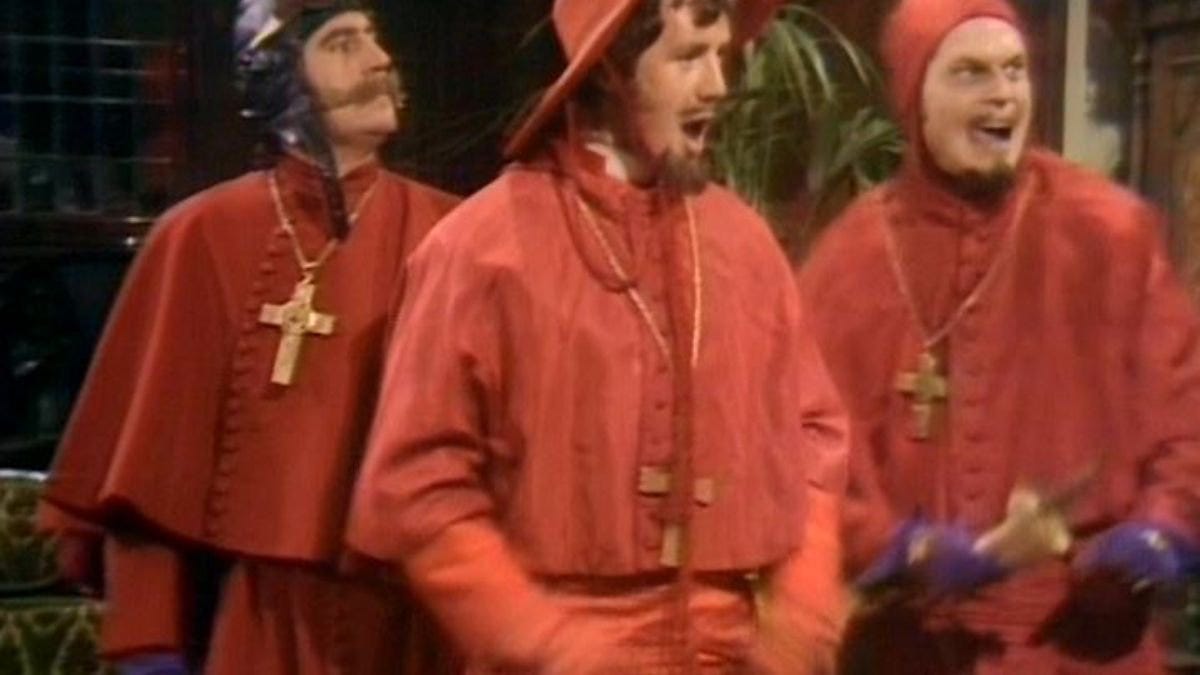
Hypocrisy is rampant within the church. It has always been an issue in spiritual realms. Jesus aimed condemnation at only a few types of people and among those are hypocrites. When I think of the loud-mouthed virtue signalling Christians who pontificate on and on about this or that societal ill, I invariably see what appears to be a large plank protruding from their eye. The other group Jesus condemned were religious leaders who heaped extra requirements upon the ability to know and follow God. The Venn diagram for these two groups is most likely just a single circle.
The longer I exist within holiness circles, the more I believe Mildred Bangs Wynkoop was being too soft when she talked about credibility gaps. She should probably have just gone with rank hypocrisy. Alas, many would not have listened to her. The world is much less subtle than it was when A Theology of Love came out. But the hypocrisy and credibility gaps have lingered and widened. So many stand in absolute certainty that their particular thoughts on a doctrine or theology are the only possible thoughts such that they are willing to eradicate differences of opinion.
It must be exhausting being the holiness police. Being the only ones who care so much about holiness that they must wage war against fellow clergy. The great irony is how many of the names you typically see attached to loud shouting, puritanical pontificating, or accusations against fellow clergy invariably have public statements that disagree with the very doctrines they claim to be concerned about. They’ll say they care about your soul all the while sticking a knife in your back.
Whether it is a vindictive charge without any merit whatsoever that gets dropped suddenly over a year into the process or overly restrictive readings of doctrines, there seems to be a mismatch in concern over sin. You see, amongst all the pearl clutching and gnashing of teeth in concern, there is a large gap in the application of concern.
What do I mean? Well, we claim to be a people who desire that all find freedom from sin. We believe in that so strongly that we will run roughshod over people to tell them about their sin. We will beat them over their heads about sin. Sorry, that’s wrong. We will hit people over the head with the sins of those outside, not the sins of the inside group. Only the scapegoat sins matter, not the ones we see in those who agree with us.
Religious bigotry? That’s fine as long as it is aimed at “those people.” Exclusionary nationalism? Perfect for those who look and think like me. Railing against those who work for a more just and equitable society? That is Gospel, because equity is “woke.” Opposing women’s ordination or teaching patriarchy as Christianity? That’s fine because “feminism is liberal.” If we had an ounce of consistency, the preceding would lead to discipline, but more often than not, it brings on accolades.(1)
If you feel comfortable signing on to accusations against a fellow member of clergy you have never met or even had a conversation with, be my guest. But when you do that while teaching against our doctrine of scripture, ordination, baptism, or other doctrines, do you feel even an ounce of irony? I asked a friend who had his credentials taken away in my denomination about someone who really seemed to dislike him. He said he had never interacted with that person other than seeing the name on a letter against him. Think about that for a moment.
Just a quick aside to realize why so many of those who shout the loudest also embrace ideologies like penal substitutionary atonement. If you are angry and bloodthirsty, then it follows that your view of God would be similar.
In the past few years, there has been irony upon irony in the pursuit of a certain kind of purity of thought. Irony is one thing, but absurdity entered the room when one member of clergy faced charges for a typical exegesis of Matthew 18 in which he pointed out that the passage was not Jesus weaponizing discipline, but a picture of reconciling relationship. The gist of that essay was that accountability is a relational idea in which those who disagree are seeking discernment together with an eye always pointing to reconciliation. Let that sink in. (The discipline of clergy section of the Nazarene Manual says the same thing about reconciliation for contextual irony.)
As for being concerned about souls? We’re free with truth about certain sins, but our silence in the face of misogyny, protection of abusers, syncretic nationalism, and syncretic partisanship exposes hypocrisy. Of course, if we are being honest, we are all hypocrites at times. It is part of existing in a complex world. But we also need to recognize that hypocrisy is real and repent.
I keep dreaming of what change holiness folk could bring about if we worried more about proclaiming a transformative relationship with God rather than endless culture wars. If we simply lived out the ideals within our covenants and doctrines, I wonder how much good would enter the world. Might it look a lot like “thy Kingdom come?”
The truth is that I deeply love the Church and the promises present within a community that is seeking to bring flourishing to a world of darkness. It is just so frustrating when Christians keep throwing wet blankets upon the lights shining into that darkness out of fear, lack of control, or just raw hatred.
My friend Aaron Simmons published a revised essay on the liberal arts recently in which he stated that “[e]xistence is an affective baptism and sometimes the water gets up our nose.” I love that sentence for so many reasons. But I also believe we can use that about holiness. Holiness is an affective baptism and sometimes the water gets up our nose. And that’s a good thing because it reminds us of the power of holiness to act in the world. We keep treating holiness as some kind of pure thinking rather than relational action in creation. No wonder people don’t “get” holiness.
I pray we remember where holiness comes from before it is too late and the hypocrisy epidemic becomes a pandemic.
(1) See the Manual: 2023 Church of the Nazarene (2)
